A branded title is a vehicle title that a state has marked with a word such as “salvage”, “rebuilt”, “flood” or “lemon” to show that the car had serious damage or another important history. The brand stays on the title when the car is sold, so the next buyer can see it, although the exact brands and rules differ from state to state.
Key takeaways
- A branded title is a vehicle title that a state marked to show serious damage or another important history.
- Get an NMVTIS report from an approved provider and verify the title record with the state agency before buying.
- Hire an independent mechanic to check the frame, airbags, wiring, rust, and signs of water before you pay.
- Call your insurer and lender to confirm the coverage and loan you can get before you agree on a price.
- Use the brand, repair quality, and resale gap to negotiate a lower price, and get the brand written on the bill of sale.
What is a branded title?
A branded title is a title with a warning label added by the state. Almost every road vehicle in the United States has a title: the legal record of who owns it (a few states skip titles for some older vehicles). A “clean” title has no warning labels. A branded title carries one or more labels added by the state motor vehicle agency, usually after an insurer declares the car a total loss or after the car is rebuilt and inspected.
The federal National Motor Vehicle Title Information System (NMVTIS) describes a brand as a label a state assigns to show a vehicle’s current or past condition. Its own examples are “junk”, “salvage” and “flood”. Because each state writes its own titling laws, the same history can carry a slightly different word in two neighboring states.
The most common title brands
These are the brands buyers meet most often. Your state may use different wording, and some states use brands not listed here.
| Brand | What it usually means | Risk for a buyer |
|---|---|---|
| Salvage | An insurer declared the car a total loss after a crash, flood, fire, theft or other damage | High: often cannot be driven or registered until repaired and inspected |
| Rebuilt or reconstructed | A former salvage car that was repaired and passed a state inspection | Medium to high: quality of the repair varies |
| Flood or water damage | The car was damaged by water, often above the floor | High: electrical faults and corrosion can show up later |
| Fire or hail | Damage from fire or a hailstorm | Varies: hail can be cosmetic; fire can harm wiring |
| Junk, non-repairable or scrap | Only fit for parts or scrap | Very high: usually cannot be titled for road use again |
| Lemon or warranty return | Bought back by the maker under a lemon law because of repeated defects | Medium: the defect may or may not have been fixed |
| Odometer not actual | The mileage shown is not the actual mileage | Medium: true wear is unknown |
| Prior taxi or prior police | Former for-hire or law-enforcement vehicle | Low to medium: usually high mileage |
California’s DMV, for example, lists “Salvaged”, “Original Taxi”, “Original Police”, “Non-USA”, “Warranty Return (or Lemon Law Buyback)” and “Remanufactured” among its own brands, and names others used by most states, including rebuilt, junk, totaled and water damage.
How a car ends up with a branded title
Most brands start with an insurance claim. The usual path looks like this:
- Damage happens: a crash, flood, fire, hailstorm or theft.
- The insurer assesses it: if repairs would cost more than the share of the car’s value set by state rules or the insurer, the car is declared a total loss.
- The title is branded: the state issues a salvage title or certificate instead of a clean title, and the total loss is reported to NMVTIS.
- The car is sold: often at a salvage auction, to a rebuilder, a dealer or a scrap yard.
- Repair and inspection: if it is fixed and passes the state’s inspection, it can get a rebuilt title and return to the road. The brand history follows it.
Lemon, taxi, police and odometer brands follow different routes: a manufacturer buyback, a change of use or a mileage finding, rather than an insurance claim.
Risks of buying a car with a branded title
The main risks are hidden damage, harder insurance and financing, and a lower resale value. A branded title does not always mean a bad car, but it does mean more questions and more paperwork.
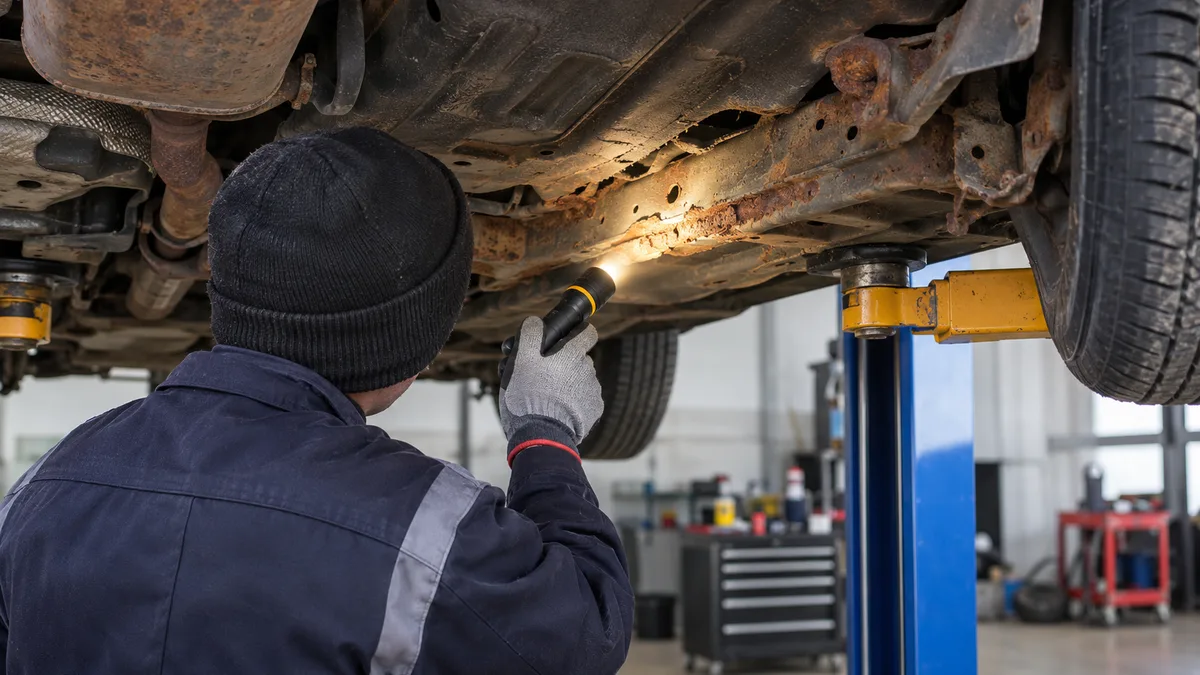
- Hidden damage. Repairs may be cosmetic while frame, airbag or electrical damage remains. California’s DMV warns that some repaired salvage vehicles are not properly repaired or tested and may be dangerous to drive.
- Insurance limits. Many insurers will sell liability coverage on a rebuilt car but may refuse or limit comprehensive and collision coverage, or ask for an inspection first.
- Harder financing. Many lenders will not finance a branded-title car, or offer worse terms, because the car is harder to value and resell.
- Lower resale value. The brand stays with the car, so you will face the same discount when you sell.
- Stolen parts. If authorities find that a rebuilt car or its parts were stolen, the car can be refused registration and seized.
If you have been in an accident yourself, our guide on handling a car accident step by step explains how claims and assessments usually work, which is where most title brands begin.
When a branded title can still make sense
A branded title can make sense when the discount is large, the damage was minor and you plan to keep the car. In detail, it can be a fair deal when:
- the price is well below the same model with a clean title, enough to cover a full inspection and future resale loss;
- the damage was minor or cosmetic, such as hail dents, and you can see photos or repair records;
- you plan to keep the car for many years, so resale value matters less;
- you only need liability insurance, for example on a second car;
- a trusted, independent mechanic checks the car before you pay.
It is usually a poor deal for flood-branded cars, cars with airbag or frame damage, or any branded car without repair records.
How to buy one safely
To buy one safely, check the records, inspect the car and confirm insurance and financing before you agree on a price:
- Run the VIN. Get an NMVTIS report from an approved provider and a full vehicle history report. NMVTIS shows title brands, the last reported odometer reading, total-loss findings and transfers to salvage or junk yards, but its own guidance says the data is not complete, so a clean report does not rule out problems.
- Check the state record. NMVTIS recommends checking the title record with the state agency as well before you buy.
- Ask for repair paperwork. Photos of the damage, parts receipts and the state inspection result tell you what was fixed and how.
- Pay for an independent inspection. Ask the mechanic to check the frame, airbags, wiring, rust and signs of water in the cabin and trunk.
- Call your insurer and lender first. Confirm the coverage and loan you can get on this exact VIN before you agree on a price.
- Negotiate on the brand. Use the brand, the repair quality and the resale gap to agree on a lower price, and get the brand written on the bill of sale.
Our checklist of questions to ask before buying a used car works well alongside these steps, and if repairs are needed after you buy, see our tips on choosing the right repair shop. For the wider pros and cons of going used, read our piece on the advantages of buying a used car.
What to ask the seller
- What exactly happened to the car, and when?
- Who did the repairs, and can I see the receipts and photos?
- Which state issued the brand, and has the car been titled in other states since?
- Has it passed the state’s rebuilt or salvage inspection, and do you have the paperwork?
- Can my mechanic inspect it before I pay?
A seller who avoids these questions, or will not allow an inspection, is a reason to walk away.
Branded title FAQs
Is a rebuilt title the same as a salvage title?
No. A salvage title usually means the car has not yet been repaired and approved for the road. A rebuilt title means it was repaired and passed the state’s inspection. Both are branded titles.
Can a branded title be removed?
Generally, no. The brand is part of the car’s legal history. Moving a car to another state to get a clean title, known as title washing, is illegal in many cases, and NMVTIS exists partly to stop it.
Can you insure a car with a branded title?
Usually, once the car has a road-legal brand such as rebuilt, you can get liability coverage. An unrepaired salvage car generally cannot be registered for the road, so standard road coverage waits until it is rebuilt. Full coverage is harder to find and may need an inspection. Ask insurers before you buy.
How much less is a branded-title car worth?
There is no fixed figure. The discount depends on the brand, the damage, the repair and the model. Expect it to be noticeably lower than the same car with a clean title, and expect the same gap when you sell.
Does a vehicle history report always show a branded title?
Not always. Reports depend on what states, insurers and salvage yards report. Use NMVTIS, a commercial report and the state title record together.